Manga AI Art Prompts | Ink Weight, Screentone, and the Language of Panels
Manga is not anime without color. It's a distinct visual medium built on ink-on-paper rendering, screentone-based tonal hierarchy, panel-driven narrative composition, and a motion language made of speed lines, impact frames, and spatial distortion that exists nowhere else in illustration. AI models prompted with "manga style" typically produce anime art that is desaturated to grayscale, with smooth gradient shading, uniform line weight, and no screentone, which is structurally different from actual manga in every way that matters.
Getting authentic manga output from AI requires tags that address the medium's specific craft: how ink is laid down (G-pen versus brush, thick versus thin, confident versus scratchy), how tone is built without color (screentone dot patterns at varying densities), how motion is communicated through visual effects rather than animation, and how the composition serves the panel rather than the frame.
Every prompt has been tested in Kalon Studio with outputs evaluated for three criteria: does the linework feel inked rather than digitally drawn, does the tonal range use screentone-style patterning rather than smooth gradients, and does the composition read as a manga panel or page rather than a desaturated anime illustration?
Prompt Text
This prompt generates a manga-style character illustration with authentic ink rendering, screen tone shading, and a high-contrast monochrome composition. Adjust the character, genre, and panel type to shift between manga sub-styles.
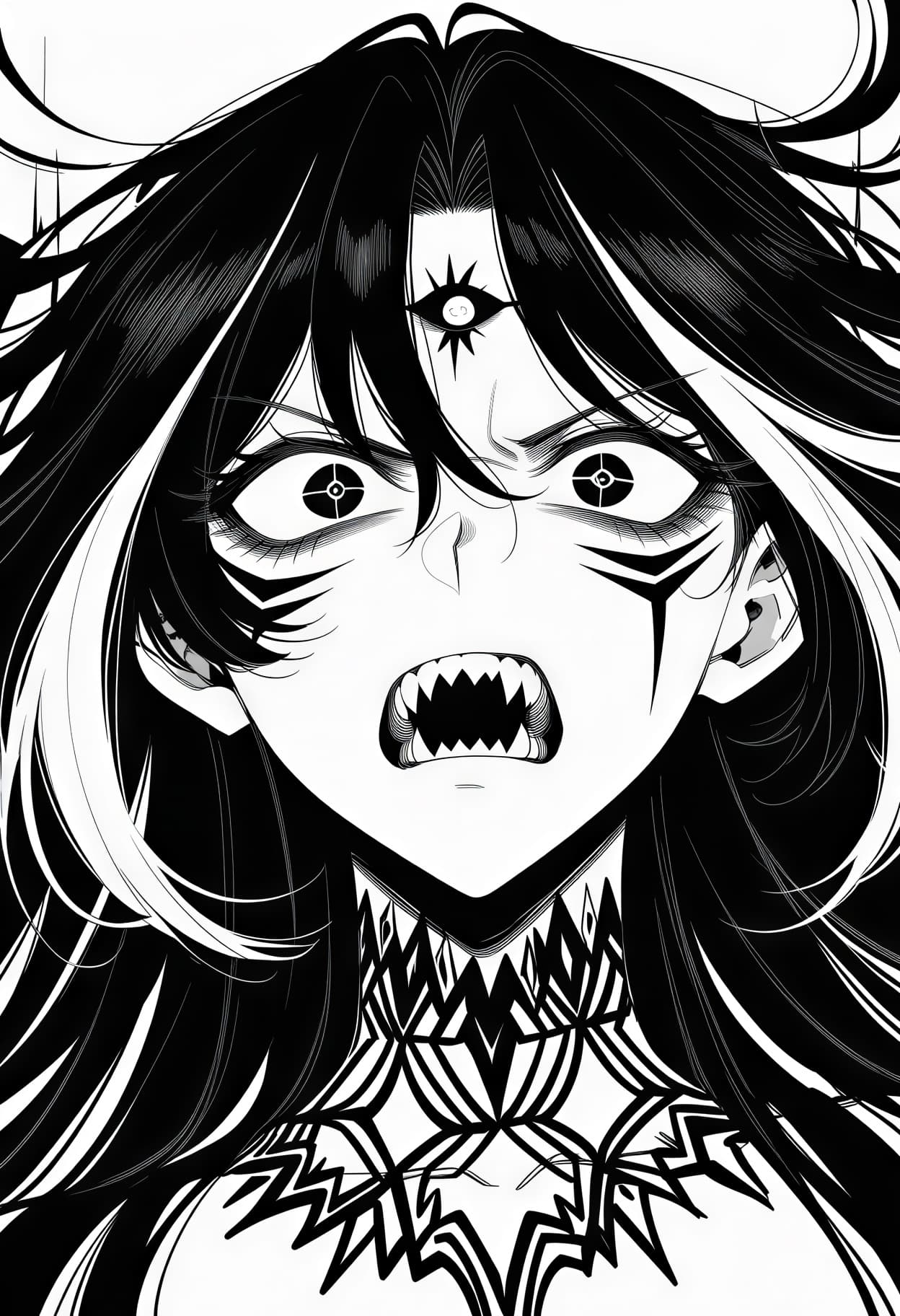
best quality, masterpiece, manga illustration, black and white ink art, 1character, detailed face with sharp features, expressive eyes with heavy black lash detail and white highlight reflection, confident G-pen linework with natural thickness variation from thin to bold, screentone dot pattern shading on face shadow and clothing, high contrast between solid black ink areas and white paper, hair rendered in solid black masses with white streak highlights, clean white background with minimal speed line accents, professional manga quality, print-ready composition, high resolution
What Makes Manga Different from Anime in AI Prompts?
Anime and manga share character design conventions — large eyes, stylized hair, and expressive faces — but they use completely different rendering systems. Anime builds tone through color, smooth gradients, and cel-shaded flat fills. Manga builds tone through ink density, screentone dot patterns, and the ratio of black to white on the page. Writing "manga" in a prompt that's otherwise structured for anime produces a monochrome anime image, not manga. The difference is structural.
Sample Output
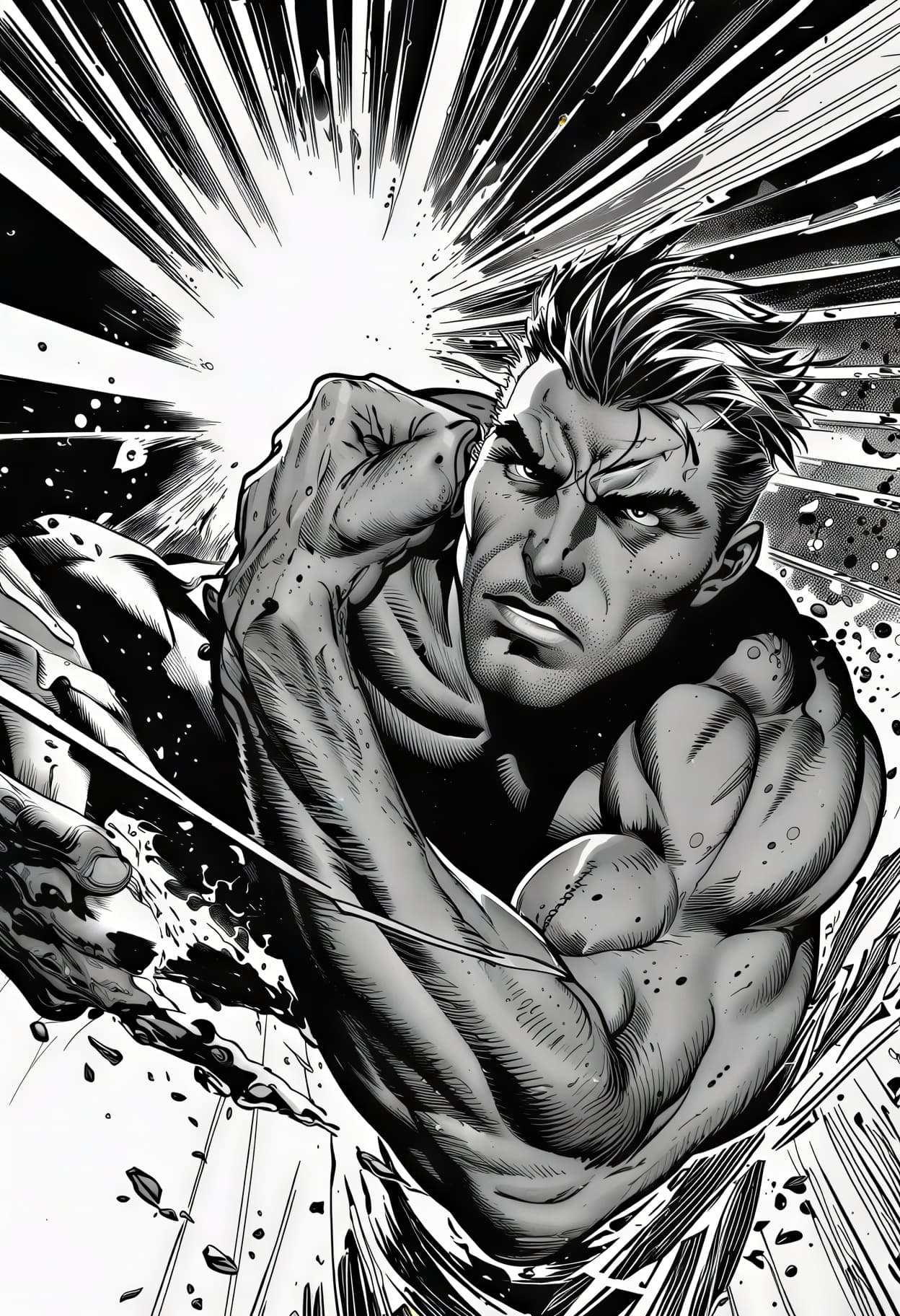
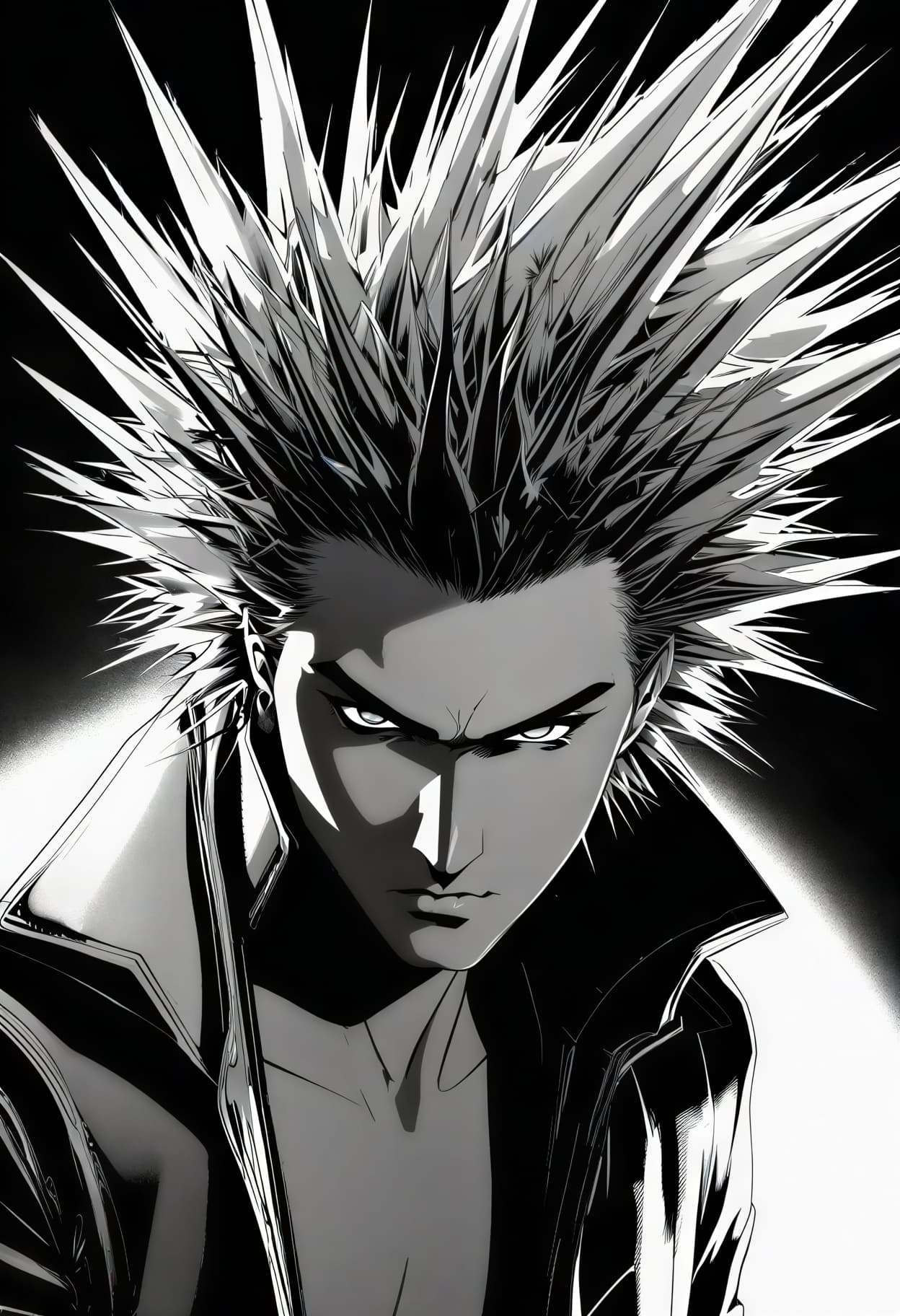
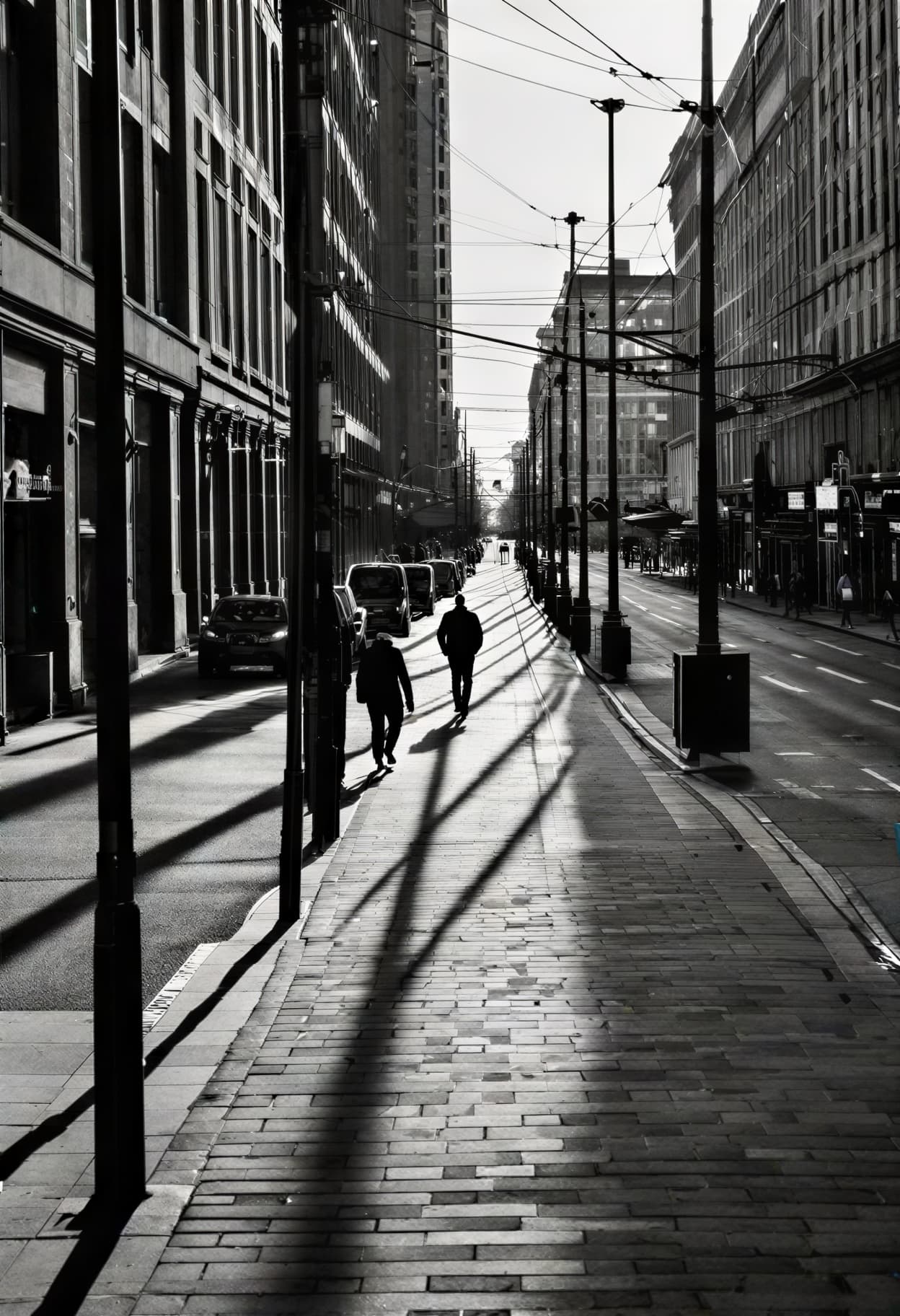
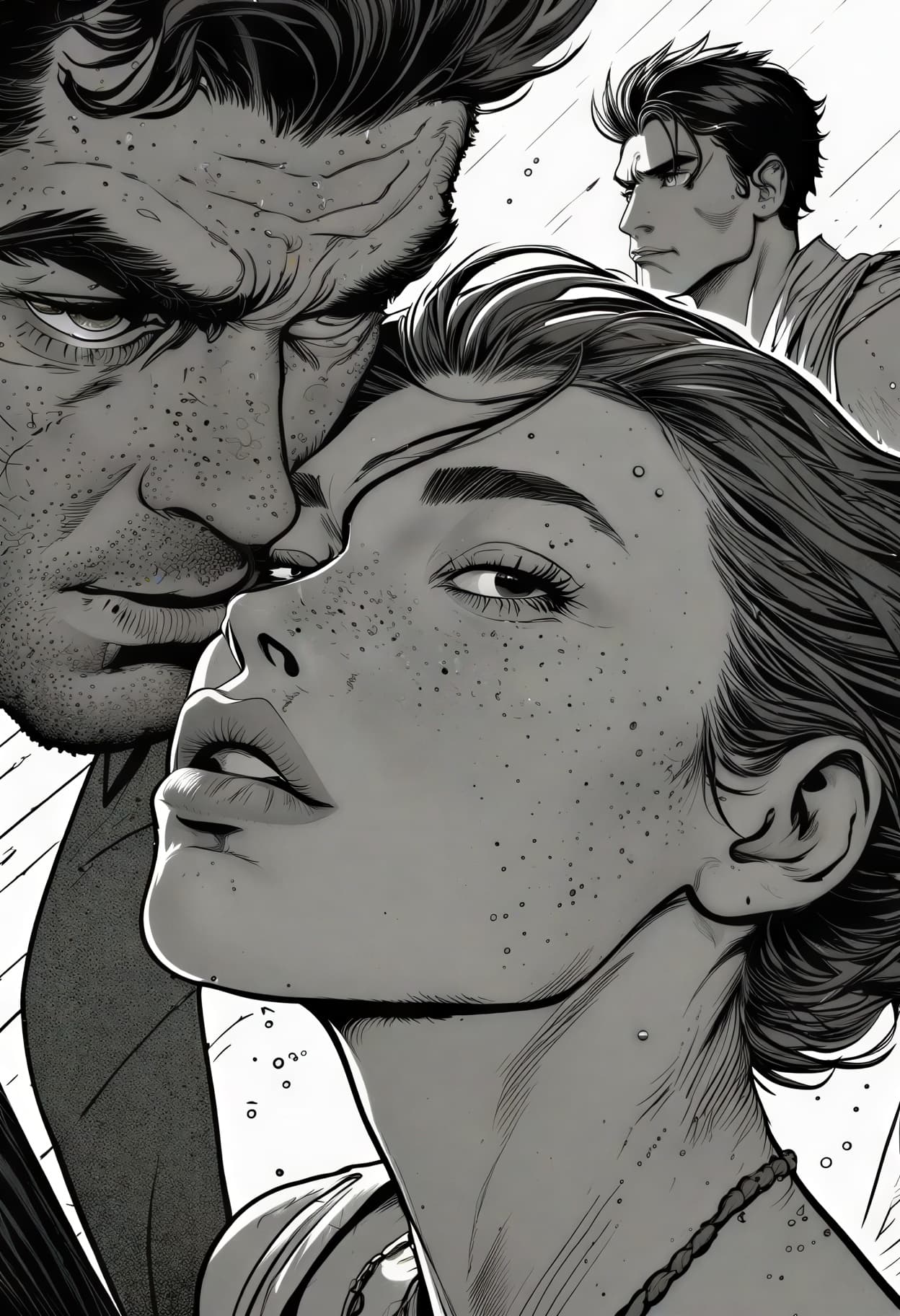
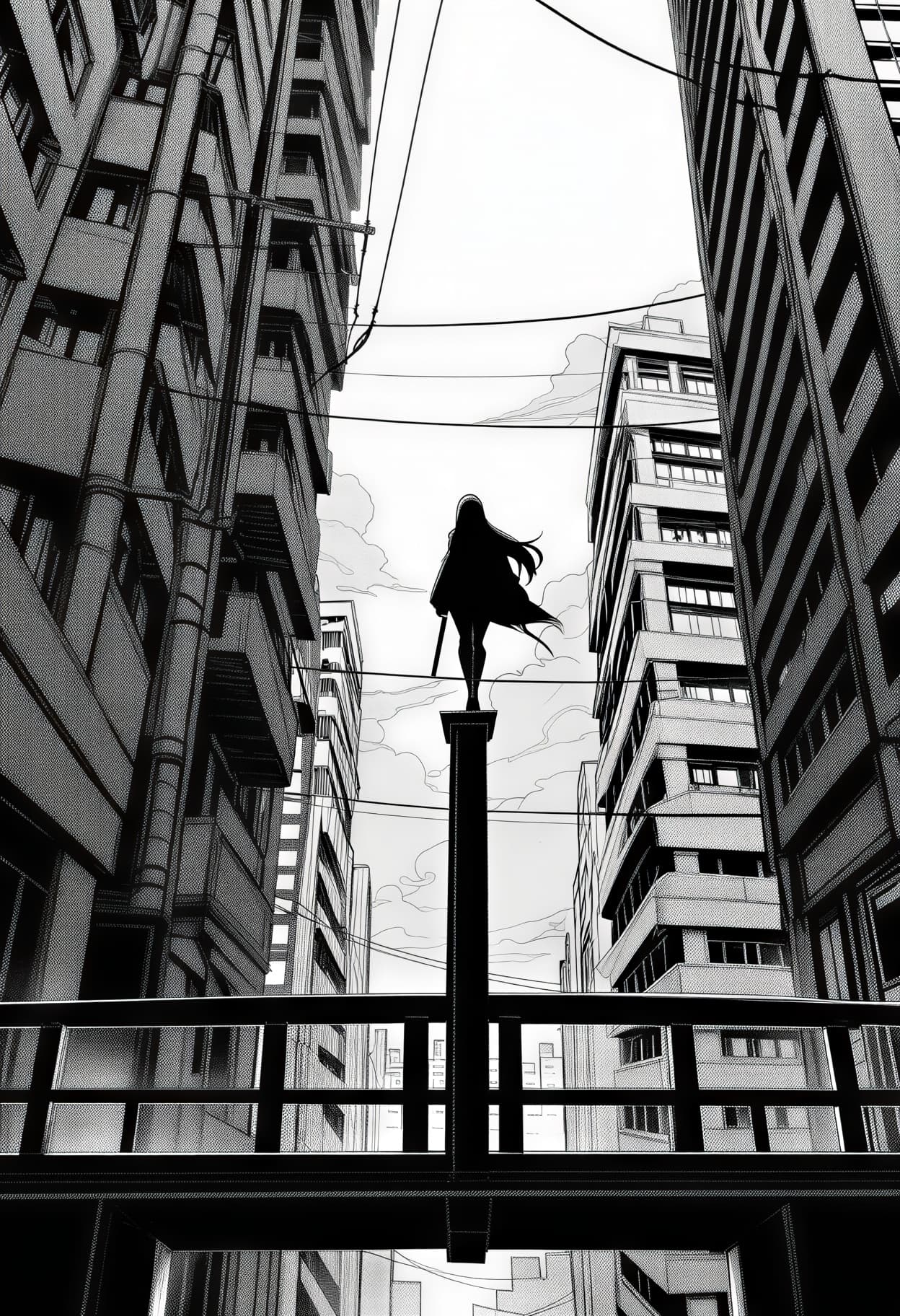
All images generated on Kalon Studio using prompts from this page. No external desaturation, screentone overlays, or post-processing applied.
What You Can Create?
Manga art takes different formats: single illustrations, panel compositions, page layouts, and cover designs, each with distinct linework, tonal, and compositional requirements.
Character Illustrations and Portraits
Standalone manga character art for profile use, fan projects, and reference sheets. Use 3:4 for portrait compositions and 2:3 for full-body character art. The base prompt and shonen hero variation are built for clean, single-character illustration output.
Panel Art and Action Scenes
Individual manga panels with motion effects, dramatic composition, and narrative tension. Use the aspect ratio that matches your intended panel shape — tall vertical for dramatic reveals, wide horizontal for establishing shots. The action page and splash page variations handle dynamic single-panel compositions.
Cover Art and Title Pages
Manga volume covers with character grouping, negative space for title text, and high visual impact. Use 2:3 for standard manga volume cover proportions. The volume cover variation includes compositional space for title placement and series branding.
Webtoon and Digital Comic Art
Full-color vertical-scroll manga for digital platforms. Use 9:16 or taller for vertical reading format. The webtoon variation uses the full-color digital rendering conventions of Korean manhwa rather than the traditional black-and-white manga style.
Prompt Variation
Five manga formats, each with distinct rendering priorities and compositional structures. Copy any directly, or blend inking and tonal tags across variations.
Shonen Hero Portrait
Bold linework, high energy, and intense facial expression.
best quality, masterpiece, shonen manga illustration, black and white ink art, 1boy, spiky wild hair rendered in solid black with sharp white highlight streaks, large determined eyes with fierce highlight and heavy lash ink, clenched jaw with defined chin, bandage across nose bridge, torn collar on jacket, bold thick G-pen outlines with aggressive confident strokes, screentone on skin shadow areas at medium density, solid black heavy shadow under chin and on neck, diagonal speed lines in background suggesting forward momentum, high contrast monochrome, shonen manga energy and intensity, 3:4 composition, high resolution
Dramatic Action Panel
Mid-battle composition with motion effects and spatial distortion.
best quality, masterpiece, manga action panel, black and white ink, dynamic mid-attack pose with fist extending toward viewer in forced perspective, extreme foreshortening on arm, radial speed lines emanating from impact point, debris fragments flying outward, motion blur on attacking limb, screentone gradient from light at impact center to dark at frame edges, heavy ink splatter accents, character expression of focused intensity, panel border slightly cracked from impact force, professional shonen manga quality, 2:3 vertical panel format, high resolution
Volume Cover Composition
Multi-element design with title space and visual hierarchy.
best quality, masterpiece, manga volume cover art, black and white with selective red accent on single element, main character in strong standing pose occupying center-right of frame, two supporting characters at smaller scale flanking, empty space at top quarter for title text and volume number, atmospheric background suggesting story setting without competing detail, bold confident linework, screentone shading creating depth hierarchy between foreground characters and background, dynamic diagonal composition, professional manga cover quality, 2:3 cover proportions, high resolution
Emotional Close-Up
Tight face framing with expressive detail and tonal intimacy.
best quality, masterpiece, manga emotional close-up panel, black and white ink, extreme close-up on face showing eyes and upper face only, tears welling in one eye with detailed liquid rendering, fine delicate linework with maru-pen precision on eyelashes and iris detail, screentone blush on cheeks at low density, subtle crosshatch shading under eye for fatigue, single tear streak catching light, heavy emotional weight, minimal background with soft screentone gradient, quiet devastating mood, professional manga quality, 4:3 horizontal panel, high resolution
Establishing Wide Shot
An environmental scene that sets the location and atmosphere.
best quality, masterpiece, manga establishing shot, black and white ink, wide cityscape view from elevated position, detailed urban architecture with signage and power lines, small figure walking alone on street below providing scale, heavy crosshatch and screentone on building shadow faces, white sky with layered cloud ink wash, leading lines of street converging to vanishing point, architectural precision in linework with ruler-straight edges, atmospheric depth through screentone density variation from foreground to background, professional seinen manga quality, 16:9 wide panel, high resolution
More Manga AI Styles
Six additional templates covering specific manga genres and visual applications.
best quality, masterpiece, shoujo manga illustration, black and white ink, 1girl and 1boy in close emotional moment, delicate thin linework with elegant curves, large detailed eyes with multiple highlight layers and decorative lash detail, soft screentone blush on both faces, flower petals and sparkle effects floating in background as emotional accents, flowing hair with ribbon-thin highlight lines, gentle and tender expression, light overall tone with minimal heavy black areas, romantic atmosphere built through tonal delicacy, professional shoujo manga quality, 3:4 composition, high resolutionbest quality, masterpiece, horror manga panel, black and white ink, unsettling close-up composition, heavy solid black ink dominating frame with figure barely visible in shadows, single eye visible with dilated pupil and bloodshot detail, scratchy uneven linework suggesting instability, crosshatch shading creating oppressive darkness, dripping ink texture at frame edges, negative space used for psychological tension, extreme contrast between pure black and stark white, disturbing and claustrophobic atmosphere, horror manga quality, 3:4 vertical panel, high resolutionbest quality, masterpiece, mecha manga illustration, black and white ink, giant robot in three-quarter view, precise mechanical linework with ruler-straight panel lines and compass-drawn curves, detailed joint mechanisms and armor plating with visible rivets and seams, screentone at varying densities to differentiate metal surfaces, cockpit hatch open showing pilot seat interior, scale reference with human figure at foot level, technical blueprint-adjacent precision, clean white background, professional mecha manga quality, 2:3 composition, high resolutionbest quality, masterpiece, seinen manga street scene, black and white ink, realistic urban environment with aged concrete buildings and cluttered signage, middle-aged character in rumpled suit walking with cigarette, mundane and grounded composition, fine detailed linework on architectural surfaces, screentone creating realistic shadow on pavement and building faces, electrical wires overhead creating visual rhythm, overcast atmosphere conveyed through uniform mid-density screentone sky, gritty everyday realism, professional seinen manga quality, 16:9 wide composition, high resolutionbest quality, masterpiece, manga splash page, black and white ink, full-page composition with no panel borders, character mid-transformation with energy radiating outward, extreme dynamic pose with body arched back, speed lines filling entire background converging on character center, heavy ink work on character with detailed musculature, screentone gradient from dense at edges to light at character center creating glow effect, flying debris and energy particles, maximum visual impact designed for page-turn reveal, professional manga quality, 2:3 full-page composition, high resolutionbest quality, masterpiece, Korean webtoon style, full color digital illustration, 1character in modern casual clothing, clean smooth digital linework with uniform weight, soft gradient cel shading rather than screentone, bright saturated color palette, simple clean background with soft blur, large expressive eyes with modern design, smooth hair rendering with gradient highlights, contemporary manhwa aesthetic, vertical scroll-optimized composition with generous negative space above and below, digital publishing quality, 9:16 vertical format, high resolutionRecommendation: Negative Prompt for Manga AI Art
Manga's primary failure in AI generation is rendering system contamination: the model produces anime-style output with smooth color gradients, uniform digital linework, and no screentone texture, then simply removes the color to create a gray image that looks nothing like actual manga. This negative prompt blocks the specific rendering habits that prevent authentic manga output.
Negative Prompt:
color, colored image, anime style coloring, smooth gradient shading, airbrush shading, cel shading, digital gradient, soft blended shadows, uniform line weight, vector lines, thin uniform outlines, gray muddy midtones, no screentone, smooth skin texture, photorealistic, 3D render, CGI, painted texture, watercolor, oil painting, pastel colors, neon colors, blurry, low quality, watermark, text in image, extra fingers, deformed face
Explanation: The first block "color, colored image, anime style coloring," is the most critical. Without it, the model frequently produces a tinted or desaturated color image rather than true black-and-white ink art. "Smooth gradient shading, airbrush shading, cel shading, digital gradient, soft blended shadows" block every form of smooth tonal rendering — manga uses screentone dot patterns and crosshatch, not gradients. This is the core difference between manga and anime rendering, and blocking it forces the model toward the correct tonal system. "Uniform line weight, vector lines, thin uniform outlines" prevent the clean digital linework that contradicts the organic, variable-weight inking that defines manga. "Gray muddy midtones, no screentone" directly targets the most common failure: a flat gray wash where screentone should be, with no visible dot pattern or crosshatch structure. "Painted texture, watercolor, oil painting" prevent the model from pulling toward illustrated or painted surfaces that contradict manga's ink-on-paper identity.
How to Generate Manga Art on Kalon Studio
- Open Kalon Studio and navigate to the Generate tab.
- Copy any prompt from this page using the copy button beside it.
- Paste it into the prompt field. Customize your concept — change from "shonen hero" to "shoujo heroine," swap "bold thick G-pen outlines" for "delicate maru-pen linework," and replace "speed lines" with "flower petal accents." The rendering tags (ink type, screentone, contrast hierarchy) are the structural foundation; keep them in place while modifying character, genre, and composition tags.
- Paste the negative prompt into the negative prompt field. For manga specifically, the negative prompt prevents color contamination and smooth gradient rendering — the two failures that lead to desaturated anime rather than authentic manga.
- Select your aspect ratio. Use 3:4 for standard vertical manga panels and character portraits. Use 2:3 for full-page compositions and volume covers. Use 16:9 for wide, establishing-shot panels. Use 4:3 for horizontal action panels. Use 9:16 for vertical webtoon format. Match the ratio to your intended panel shape and reading direction.
- Click Generate. Review 4–6 outputs — the strongest manga result will have linework that varies in thickness with confident directional strokes, tonal areas built from visible screentone dot patterns or crosshatch rather than smooth gradients, true black ink areas alongside clean white paper space, and a clear three-value hierarchy of black, screentone gray, and white.
Do / Don't Tips: Producing Authentic Manga
✅ DO:
❌ DON'T:
Kalon Vs Other Manga AI Art
Kalon produces impressive Manga AI art with sharp linework, expressive characters, and authentic comic-style details, delivering high-quality visuals compared to many typical AI image generators.
| Feature | Kalon Studio | Mew | OpenArt | PromptHero | Anifusion |
|---|---|---|---|---|---|
| Pre-written manga prompts | 11 tested templates | 20+ Gemini prompts | Generator page | Community gallery | Style generator |
| Copy-paste prompt library | One-click copy buttons | Blog copy (Gemini flags) | Not available | Per-image copy | Try This buttons |
| Manga craft education | Ink + screentone + panel + motion | Refine workflow tips | "Be descriptive" tips | None | Style overview |
| Manga-specific negative prompt | Anti-color + anti-gradient + anti-uniform-line | Not provided | Not provided | Per-image user negatives | Not provided |
| Verified sample outputs | Kalon-generated images | Gemini previews | Community gallery | Community gallery | Platform Preview |
| Platform compatibility | Standard tags work anywhere | Gemini-specific | Platform-native | Multi-Platform | Platform-native |
| Genre separation | Shonen/Shoujo/Seinen/Horror/Mecha/Webtoon/Cover/Splash/Action/Emotional/Establishing | Mixed genre examples | Manga as one category | Tag filtering | Manga as a sub-style |
| Panel format guidance | Per-variation format and ratio | Panel layout mention | Not available | Not available | Not available |
| Free access | Daily coins included | Free with limits | Free with limits | Free with credits/gallery | Free with limits |
Frequently Asked Questions
Ink on Paper, Not Gray on Screen!!
G-pen linework, screentone tonal systems, and panel-native composition — not desaturated anime, but manga built from its own rendering principles.
Generate Manga Art Free