90s Anime Prompts for AI Art | Cel Paint, Film Grain, and the Analog Edge
The 90s anime look is not just "anime, but older." It's a product of a specific production pipeline: hand-drawn cels painted with physical pigment, photographed onto 35mm film, and broadcast through analog video systems. Every visual quality that defines the era — the slightly uneven linework, the warm color cast, the soft grain, the way highlights on eyes shimmer with hand-painted detail — comes from that analog chain. AI models trained primarily on modern digital anime don't inherently produce these qualities. They produce clean, sharp, uniformly colored output that reads as contemporary regardless of what style tag you add.
Getting authentic 90s results from AI requires a prompt structure that addresses the era's production method, not just its surface appearance. These prompts specify the linework weight and variation, the cel paint layering that creates stepped rather than smooth shadows, the film grain texture that sits across the entire frame, and the color gamut limitations that gave 90s anime its distinctive warmth.
Every prompt has been tested in Kalon Studio with outputs evaluated for period accuracy: does the linework feel hand-drawn, do the colors sit within the era's restricted palette, and do the analog artifacts feel structural rather than decorative?
Prompt Text
This prompt generates a 90s anime character portrait with period-accurate production values, hand-drawn linework, cel-paint rendering, a warm, restricted color palette, and film-grain texture. Adjust the character, expression, and genre tags to shift between 90s sub-styles.
best quality, masterpiece, 1990s anime style, 1girl, sharp angular facial features, large detailed eyes with multi-layered highlight reflections, slightly thick hand-drawn linework with natural weight variation, cel-shaded skin with visible paint edge between light and shadow zones, warm slightly muted color palette with limited saturation, hair rendered in blocky color sections with hard-edge highlights, soft film grain texture across entire frame, slight warm color cast, upper body composition, simple gradient background in warm tone, vintage anime production quality, nostalgic atmosphere, high resolution
What Defines 90s Anime in AI Prompts?
Adding "90s anime" to a modern anime prompt produces a slight color shift and maybe some grain — it doesn't produce the structural visual differences that defined the era. Those differences came from the physical production process, and recreating them requires prompt tags that address each stage of that process.
Sample Outputs
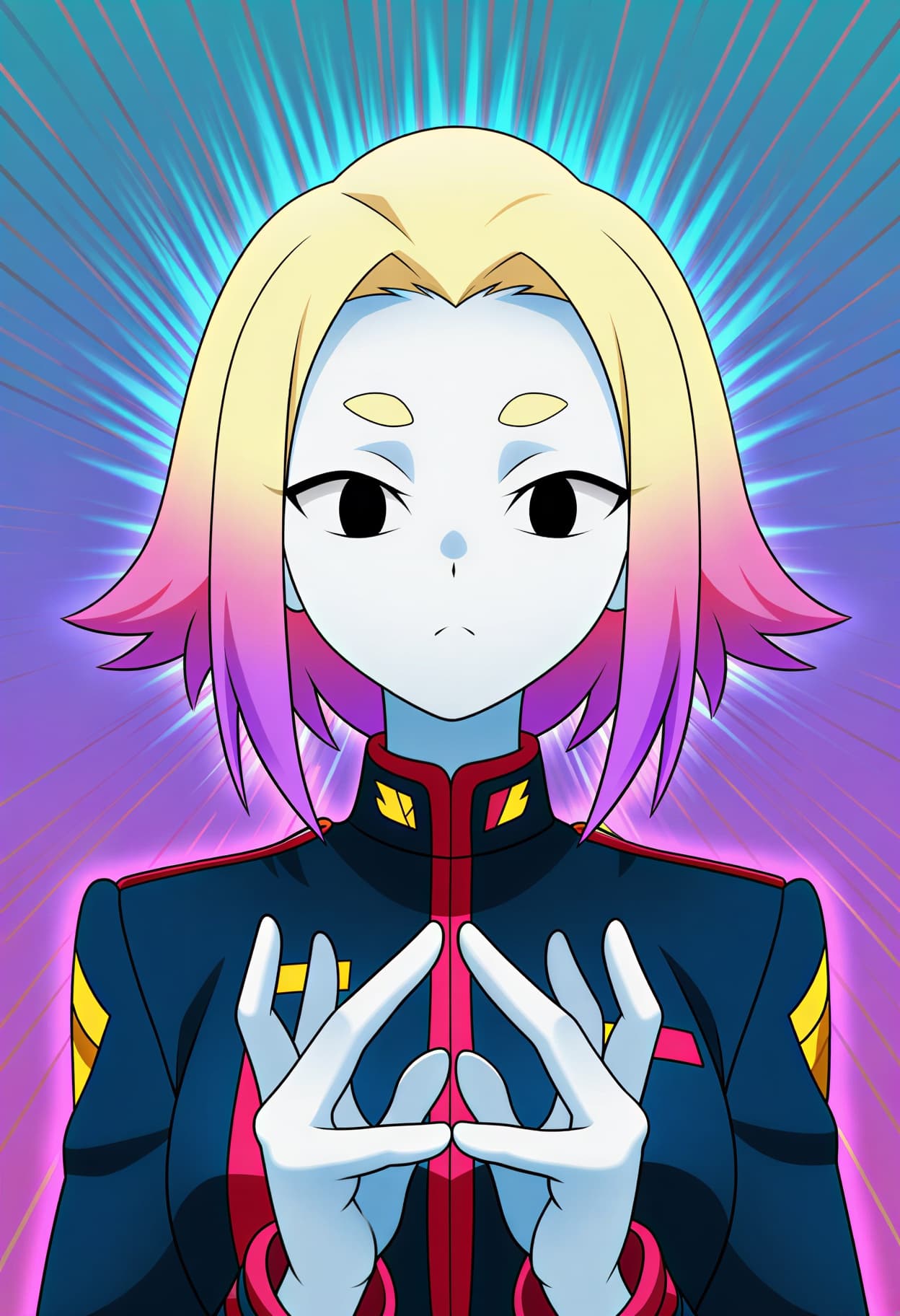
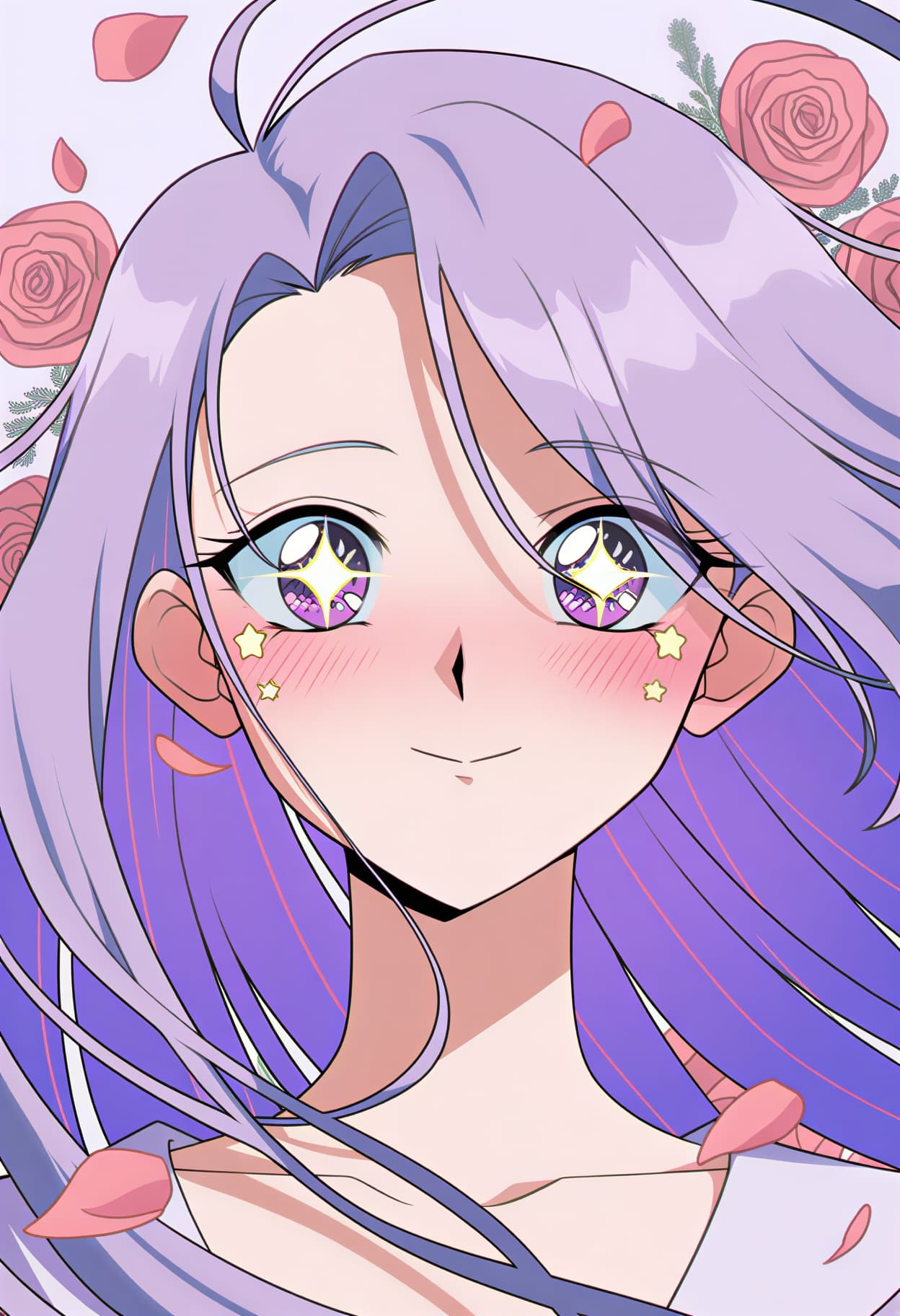
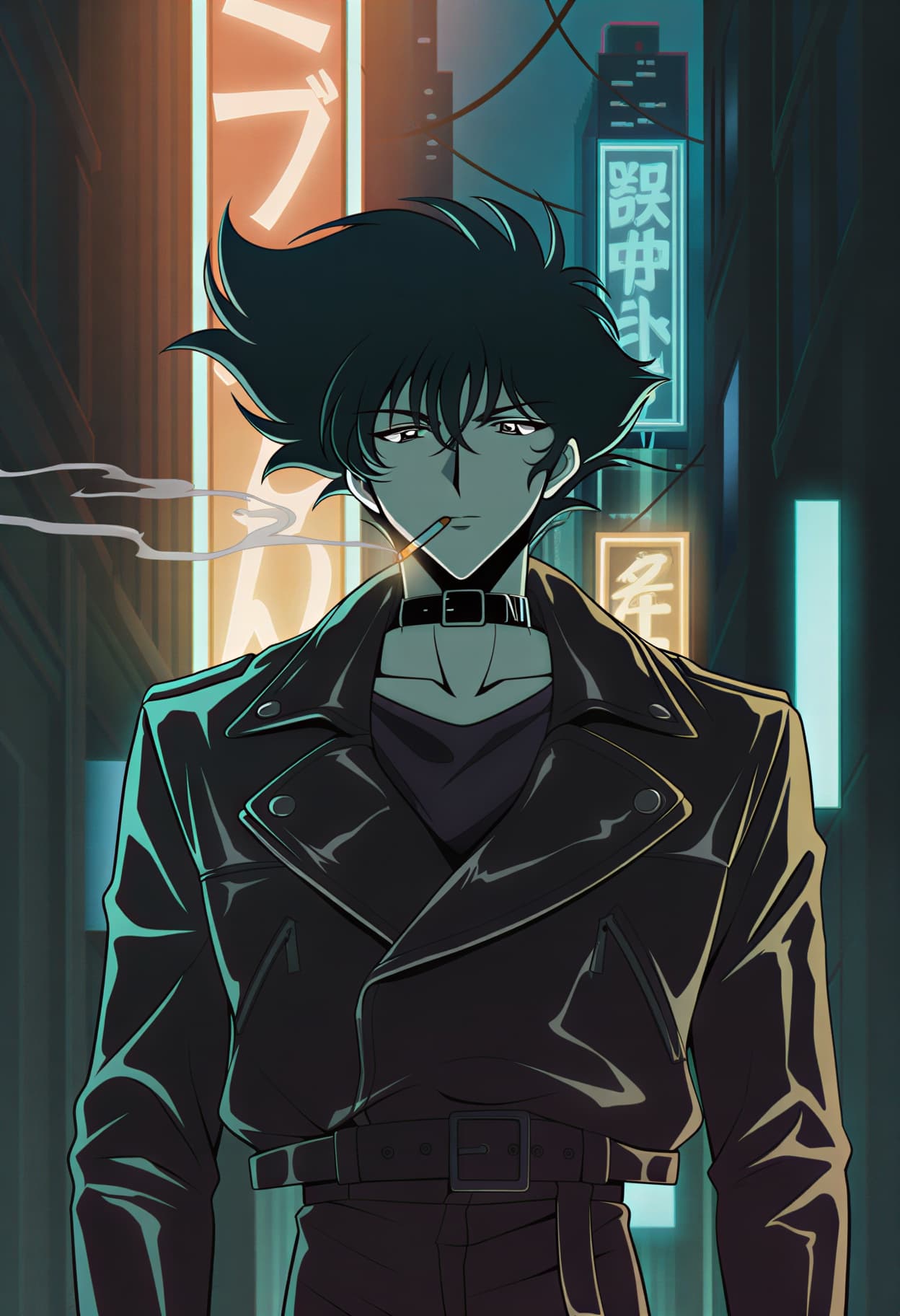
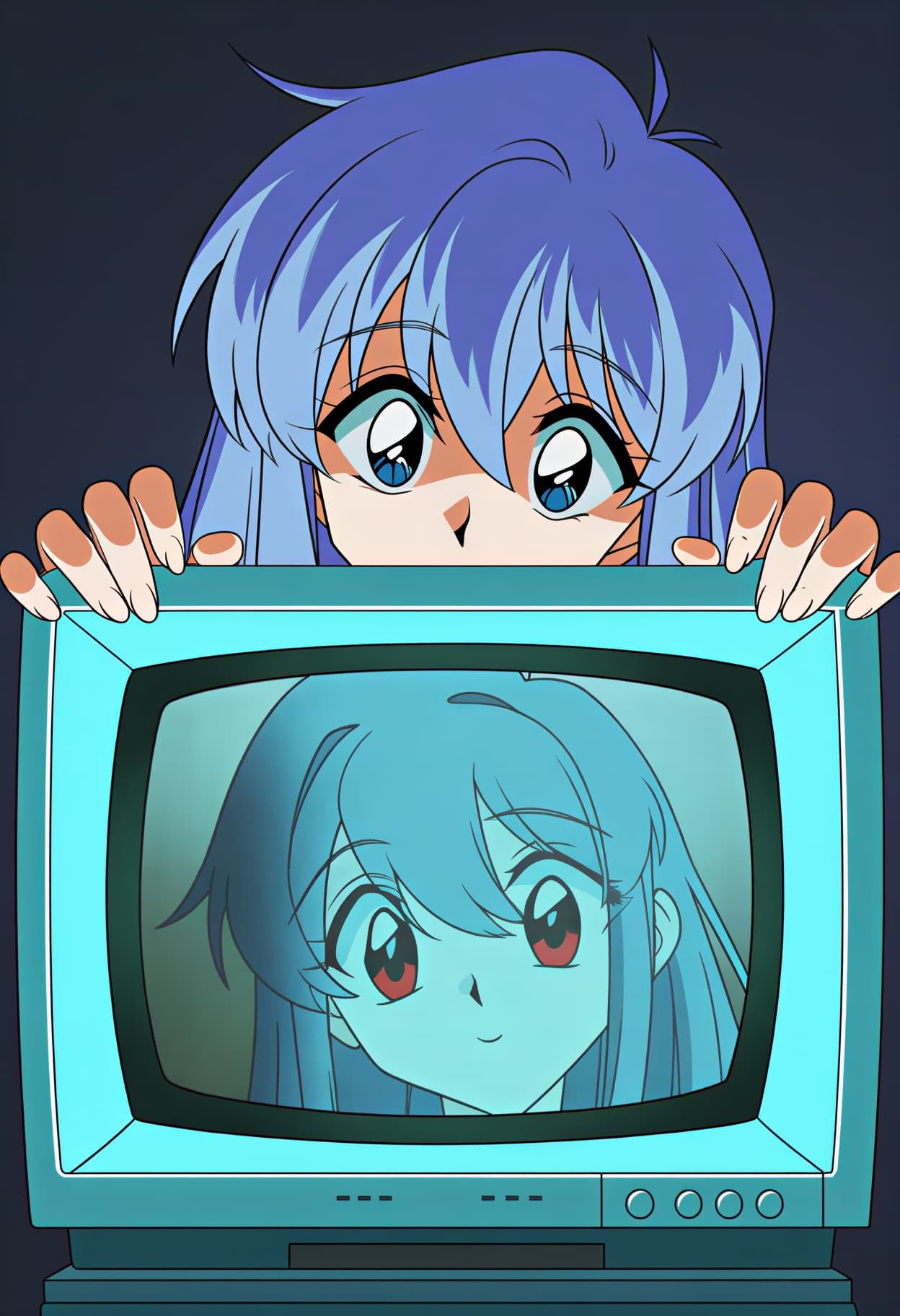
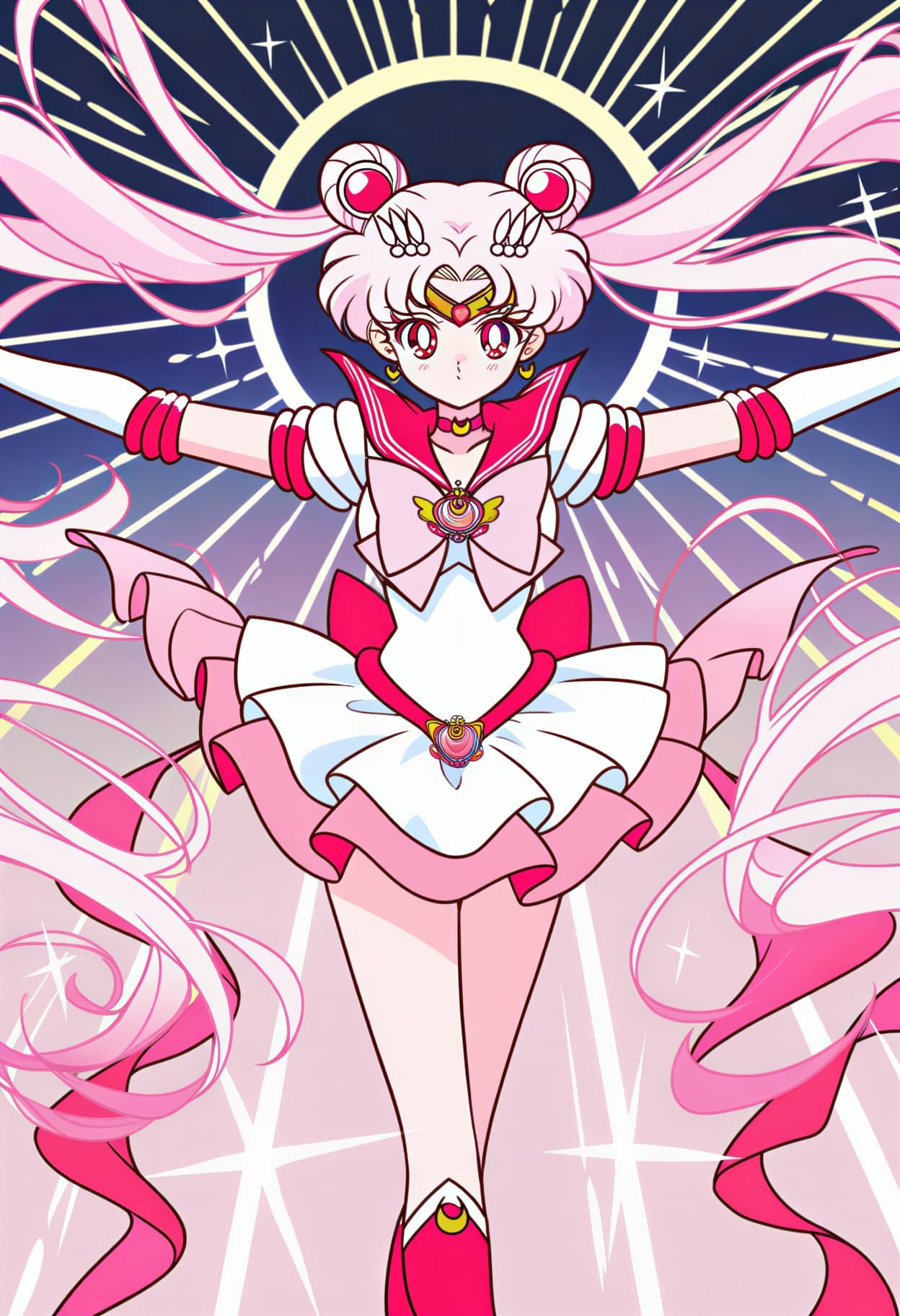
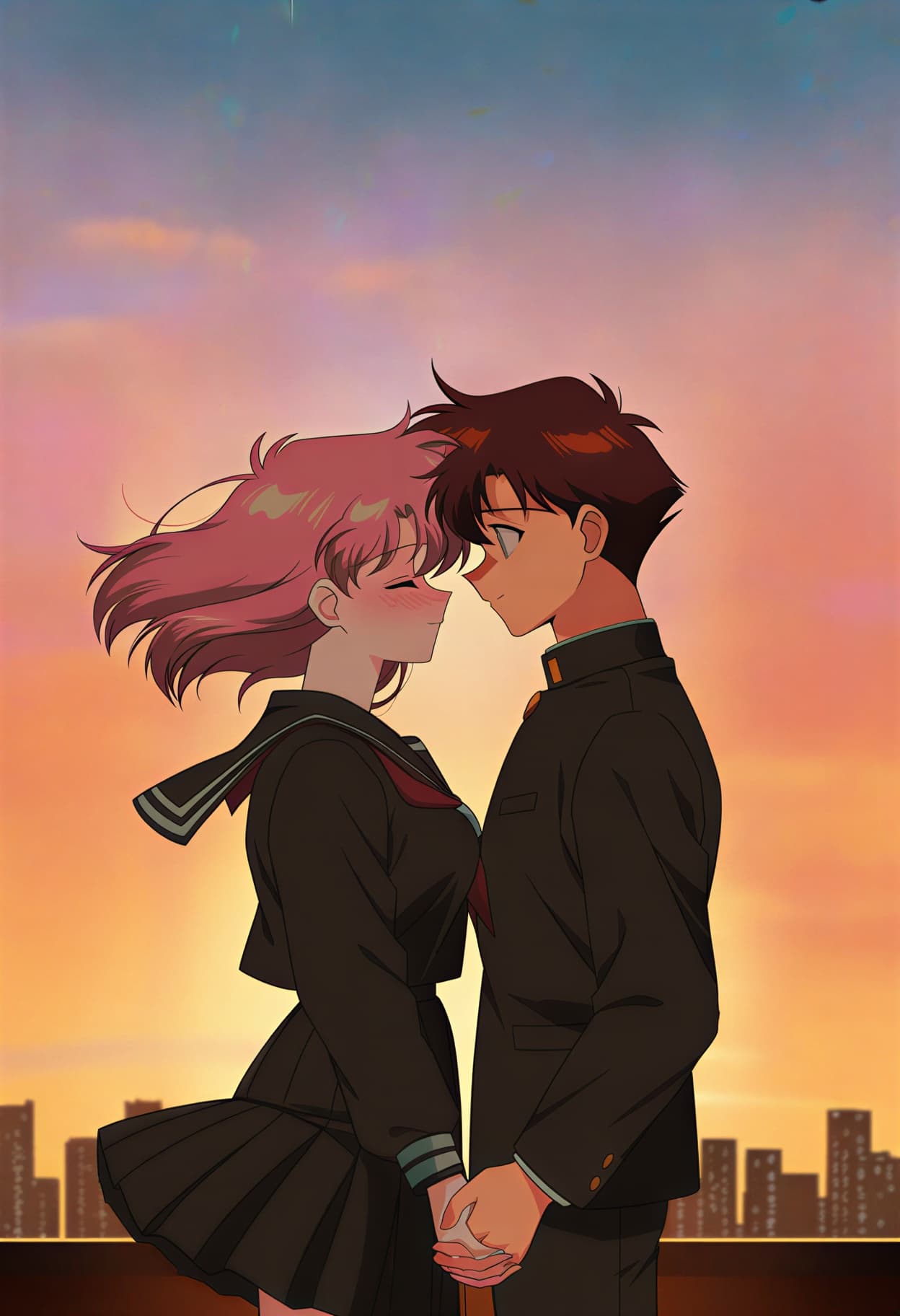
All images generated on Kalon Studio using prompts from this page. No external retro filters, grain overlays, or color grading applied.
What You Can Create?
90s anime encompasses several distinct genre aesthetics within the same era, each with different visual priorities. These prompts cover the most requested applications.
Character Art and Fan Tributes
Original characters rendered in authentic 90s anime production style for personal projects, fan communities, and social sharing. Use 3:4 for portrait compositions and 2:3 for full-body character art. The shoujo portrait and noir action variations work best for standalone character illustrations.
Retro Wallpapers and Screen Backgrounds
90s anime scenes and character compositions formatted for desktop and phone screens. Use 16:9 for desktop, 9:16 for phone. The VHS screencap and sunset romance variations produce the strongest nostalgic wallpaper compositions. Include grain and color cast tags for maximum period authenticity.
Sticker and Print Art
90s anime characters designed for sticker sheets, poster prints, and merchandise. Use 1:1 for sticker-ready compositions and 2:3 for poster format. Clean the background to a solid or simple gradient for easier die-cutting and print production.
Concept Art and Visual References
Period-accurate character and scene references for animation projects, game design, or narrative illustration set in the 90s anime aesthetic. Use the aspect ratio that matches your production pipeline. Generate multiple expressions and poses of the same character concept to build a reference sheet.
Prompt Variations
Five 90s anime sub-genres, each with distinct visual priorities within the shared era aesthetic. Copy any directly, or blend genre-specific tags across variations for hybrid styles.
Shoujo Portrait
Soft, emotionally expressive character art with delicate detail.
best quality, masterpiece, 90s shoujo anime portrait, 1girl, slender face with pointed chin, enormous sparkling eyes with four-layer highlight reflections and star-shaped catchlight, long flowing hair with wind movement and blocky color highlights, delicate lash detail, soft pink blush on cheeks, gentle melancholic expression, flower petal accents drifting in frame, warm rose and lavender color palette, cel paint shading with soft edge on face, hand-drawn linework, film grain, nostalgic romantic atmosphere, 3:4 portrait composition, high resolution
Noir Action Hero
Hard-edged character design with dramatic contrast and tension.
best quality, masterpiece, 90s anime action style, 1person, sharp angular face with defined jawline, narrow intense eyes with single hard highlight, short windswept hair, leather jacket with collar turned up, cigarette smoke curling from hand, standing against city night background with distant neon, high contrast lighting with deep shadows on one side of face, bold confident linework with thick outlines, muted cool color palette with warm accent on cigarette ember, film grain heavy, Cowboy Bebop atmosphere, 3:4 composition, high resolution
VHS Screencap
Designed to look like a captured frame from a VHS-recorded broadcast.
best quality, masterpiece, 90s anime VHS screencap, 1girl looking over shoulder, mid-conversation expression with mouth slightly open, slightly soft focus as if captured from analog video, visible horizontal scan lines at low opacity, subtle color bleed at high-contrast edges, warm oversaturated color cast, slight image softness simulating VHS resolution loss, 4:3 aspect ratio matching CRT television format, cel-shaded with flat color zones, thick hand-drawn outlines, TV broadcast compression artifacts at very subtle level, frozen moment aesthetic, nostalgic and authentic, high resolution
Magical Girl Transformation
Ornate costumes and sparkle effects within 90s production constraints.
best quality, masterpiece, 90s magical girl anime, 1girl, dramatic transformation pose with arms extended, elaborate frilly costume with ribbon and bow details rendered in cel paint flat colors, tiara or headpiece with jewel catching light, long twintail hair flowing upward with color gradient, starburst sparkle effects and light rays emanating from figure, dynamic diagonal composition, saturated but warm color palette leaning pink gold and white, bold linework with confident hand-drawn quality, film grain over sparkle effects, Sailor Moon era aesthetic, high resolution
Sunset Romance
Warm emotional scene with environmental storytelling.
best quality, masterpiece, 90s anime romance scene, 1boy and 1girl standing together at sunset on school rooftop, wind blowing hair and school uniforms, golden hour light painting warm tones across both figures, long shadows stretching behind them, city skyline visible in distance below, expressions of quiet tenderness, cel-shaded warm skin tones with orange light, sky rendered in layered warm gradient from gold to deep pink, hand-drawn linework softened by warm light, film grain, bittersweet nostalgic atmosphere, 16:9 wide composition, high resolution
More 90s Anime AI Styles
Six additional templates covering specific 90s anime genres and visual approaches.
best quality, masterpiece, 90s mecha anime cockpit scene, pilot in form-fitting suit gripping control handles, multiple analog instrument panels with glowing green and amber displays, HUD overlay reflections on visor, mechanical detail on cockpit frame, dramatic forward-facing composition, high-contrast lighting from instrument glow against dark cockpit, tense focused expression, bold technical linework, cel shading on figure with painted mechanical surfaces, Evangelion-era aesthetic, film grain, 4:3 composition, high resolutionbest quality, masterpiece, 90s shonen anime battle scene, 1boy mid-attack with fist drawn back, energy aura radiating from body in painted cel effect, torn clothing showing intensity, speed lines filling background, opponent partially visible at frame edge, dramatic low-angle composition, high-contrast cel shading with bold shadow shapes, thick confident linework, primary color palette of red blue and gold against dark background, Dragon Ball Z era intensity, film grain over energy effects, dynamic action composition, high resolutionbest quality, masterpiece, late 1980s OVA anime style, 1person, hyper-detailed character design with intricate armor or clothing, significantly more rendering detail than TV anime, realistic body proportions closer to actual human ratios, detailed background with painted depth, higher frame quality suggesting theatrical or direct-to-video production, rich saturated color palette with precise cel paint application, film grain with fine texture, dramatic cinematic lighting, Akira and Bubblegum Crisis era aesthetic, 3:4 composition, high resolutionbest quality, masterpiece, 90s anime slice-of-life, interior of small Japanese apartment, 1girl sitting at low table eating ramen, steam rising from bowl, detailed room clutter with manga volumes and cushions, warm lamplight creating cozy atmosphere, window showing evening blue outside, everyday domestic scene with nostalgic warmth, cel-shaded with warm interior lighting, hand-drawn linework on both character and environment, soft muted color palette with warm amber dominant, film grain, quiet contemplative mood, 4:3 composition, high resolutionbest quality, masterpiece, 90s anime space opera, vast starfield background with painted nebula colors, large spaceship in midground with detailed hull plating and engine glow, smaller fighter craft in formation, dramatic scale contrast between vessels, deep space blacks with warm engine exhaust light, painted star background with individually placed bright stars, cel-shaded ship surfaces with mechanical precision, bold linework on ship outlines, Macross and Gundam era aesthetic, film grain across entire frame, panoramic 16:9 composition, high resolutionbest quality, masterpiece, 90s anime school scene, empty school corridor at golden hour, long afternoon shadows stretching across polished floor, warm sunlight streaming through windows on left side, dust particles visible in light beams, shoe lockers and bulletin board visible along wall, single figure walking away in distance, contemplative solitude, warm amber and soft blue shadow palette, cel-painted backgrounds with hand-drawn architectural detail, film grain, melancholic end-of-day atmosphere, 16:9 composition, high resolutionRecommendation: Negative Prompt for 90s Anime AI Art
The primary failure in 90s anime generation is modern contamination. AI models trained on contemporary anime default to the visual qualities of 2020s production: smooth digital gradients, uniform vector linework, hyper-saturated colors, and rounded soft features. These modern characteristics are structurally incompatible with 90s aesthetics. This negative prompt strips them away, pushing the model toward the analog production qualities the era requires.
Negative Prompt:
modern anime style, digital art, clean vector lines, uniform line weight, smooth gradient shading, airbrush shading, hyper-saturated colors, neon bright colors, rounded soft features, round chin, small simplified eyes, digital rendering, CGI, 3D render, photorealistic, clean digital coloring, no film grain, sharp digital edges, modern character design, 2020s anime aesthetic, gradient hair color, soft blended shadows, plastic skin, watermark, text, signature, extra fingers, deformed face, blurry, low quality
Explanation: The first block, "modern anime style, digital art, clean vector lines, uniform line weight, smooth gradient shading," targets the core rendering differences between 90s and modern anime. These are the default outputs that AI models produce when prompted for anime, and they directly contradict every period-specific tag in the positive prompt. "Hyper-saturated colors, neon bright colors" protect the warm, muted palette that 90s analog production created. "Rounded soft features, round chin, small simplified eyes" block the modern character design language that replaced the angular, detail-heavy face construction of the 90s. "No film grain, sharp digital edges" prevent the model from producing clean output that lacks the analog surface texture that defines the era. "Gradient hair color, soft blended shadows" block two specific modern anime conventions — multi-tone gradient hair and smooth shadow transitions — that immediately break period authenticity.
How to Generate 90s Anime Art on Kalon Studio
- Open Kalon Studio and navigate to the Generate tab.
- Copy any prompt from this page using the copy button beside it.
- Paste it into the prompt field. Customize for your character and genre — change "shoujo portrait" to "mecha pilot," swap "rose and lavender palette" for "deep blue and gunmetal gray," replace "gentle melancholic expression" with "fierce battle determination." The era-specific tags (linework, cel paint, film grain, color gamut) should remain in every 90s anime prompt; they're the structural tags that create period accuracy.
- Paste the negative prompt into the negative prompt field. For 90s anime specifically, the negative prompt prevents the modern digital anime contamination that is the single most common failure — the model producing clean, sharp, saturated contemporary output despite the retro tags in the positive prompt.
- Select your aspect ratio. Use 4:3 for authentic CRT television format; this is the native ratio of 90s anime broadcasts and the most period-accurate choice. Use 3:4 for portrait character compositions. Use 16:9 for wide cinematic scenes and desktop wallpapers. Use 1:1 for profile pictures and sticker-ready output.
- Click Generate. Review 4–6 outputs — the strongest 90s anime result will have linework that varies in thickness naturally, shadow edges that are defined rather than blended, colors that sit in a warm and slightly muted range, and film grain that covers the entire image uniformly including the character.
Do/Don't Tips: Getting Period-Accurate Results
✅ DO:
❌ DON'T:
Comparison Table
Kalon generates 90s anime AI art with nostalgic aesthetics, bold colors, expressive characters, and detailed styling, delivering high-quality results that capture the classic anime vibe.
| Feature | Kalon Studio | Anifusion | JustBuildThings | NightCafe | PromptDen |
|---|---|---|---|---|---|
| Pre-written 90s anime prompts | 11 tested templates | 3 example prompts | None — preset only | None — style tag only | Community gallery only |
| Copy-paste prompt library | One-click copy buttons | Try This buttons | Not available | Not available | Prompt copy per image |
| Era-accuracy education | Production pipeline breakdown (linework/cel/color/grain) | Style overview + FAQ | Brief description | None | None |
| 90s-specific negative prompt | Anti-modern-contamination tags | Not provided | Not provided | Not provided | Per-image user negatives |
| Verified sample outputs | Kalon-generated images | Anifusion previews | Generator previews | Community gallery | Community gallery |
| Platform compatibility | Standard tags, works anywhere | Platform-native | Platform-native | Platform-native | Multi-platform |
| Genre separation within the 90s | Shoujo/Shonen/Mecha/Noir/Magical Girl/VHS/OVA/Romance/Space/Slice-of-Life/School | General 90s + genre FAQ | Single retro preset | Single retro tag | Tag-based filtering |
| Analog artifact education | Structural production explanation | "Optional VHS" tips | Brief mention | None | None |
| Free access | Daily coins included | Free with limits | Free with limits | Free with credits | Free gallery |
Frequently Asked Questions
The Analog Era, Rebuilt from the Production Up!!
Cel paint edges, hand-drawn linework, and film grain that sits on every pixel — not a retro filter on modern anime, but the production qualities of the era translated into prompts.
Generate 90s Anime Free