AI Landscape Prompts | Depth, Weather, and the Horizon Line
Landscape is one of the genres where AI generation fails most noticeably — and where most users can't identify why. The image looks pretty at first glance, but something feels wrong: the mountains don't recede naturally, the sky and ground seem disconnected at the horizon, the foreground is as sharp and saturated as the background, or the entire scene looks like a flat painting with no sense of physical space. These are all failures of spatial construction, and they occur because standard prompts describe subjects without specifying the spatial relationships among them.
These prompts are built around the three spatial systems that make a landscape feel real: foreground-midground-background layering that creates depth, atmospheric perspective that changes how distant objects look compared to near ones, and sky-ground integration at the horizon where the two halves of the image must meet convincingly.
Every prompt has been tested in Kalon Studio, with outputs evaluated for spatial coherence across the full depth of the scene, horizon-line accuracy, sky rendering quality, and atmospheric consistency from the foreground to the background. Below you'll find the full prompt library, an anatomy section explaining how each spatial tag works, and a negative prompt tuned for landscape's specific rendering failures.
Base Prompt
This prompt generates a layered landscape with foreground detail, midground subject, distant background, and atmospheric depth control. Adjust the biome, time of day, and weather to shift the scene while keeping the spatial framework intact.
best quality, masterpiece, expansive landscape photograph, foreground of wildflower meadow with visible individual stems, midground winding river reflecting sky color, background mountain range with snow-capped peaks fading into atmospheric haze, layered depth from near to far, golden hour sunlight casting long shadows across terrain, warm amber light in foreground transitioning to cool blue-purple at distant mountains, cumulus clouds with defined edges and soft undershadow, gentle breeze visible in grass movement, natural color palette, wide-angle lens composition, 16:9 aspect ratio, high resolution, 8k
How Landscapes Are Built in AI Prompts
A portrait prompt describes one subject. A landscape prompt describes three spatial zones and the atmosphere that connects them. Without this layered structure, the model renders a flat scenic image, pretty colors arranged on a single plane, with no sense that you could walk into the scene. The prompts on this page build landscapes from back to front, controlling how each zone relates to the others.
Sample Outputs
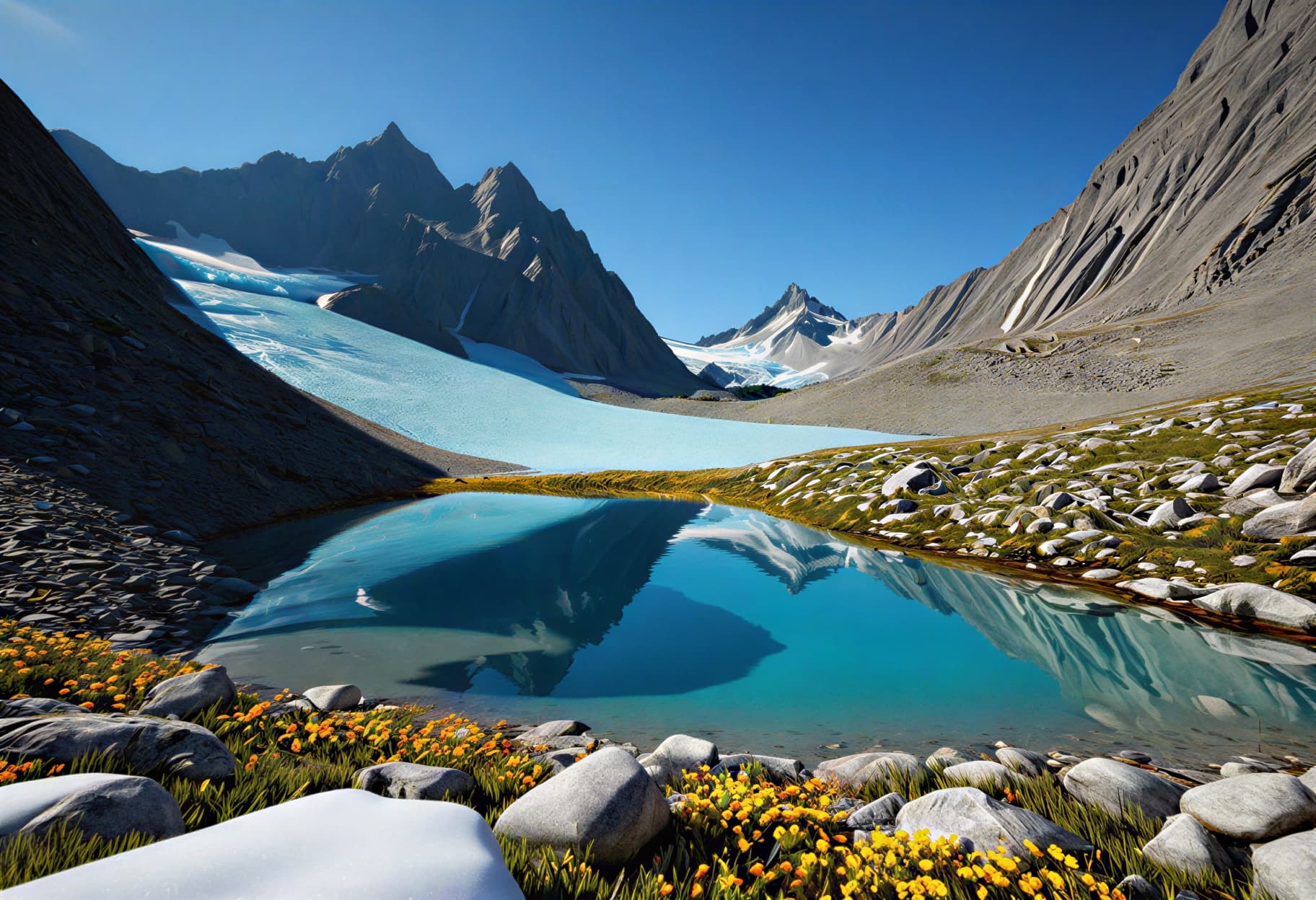
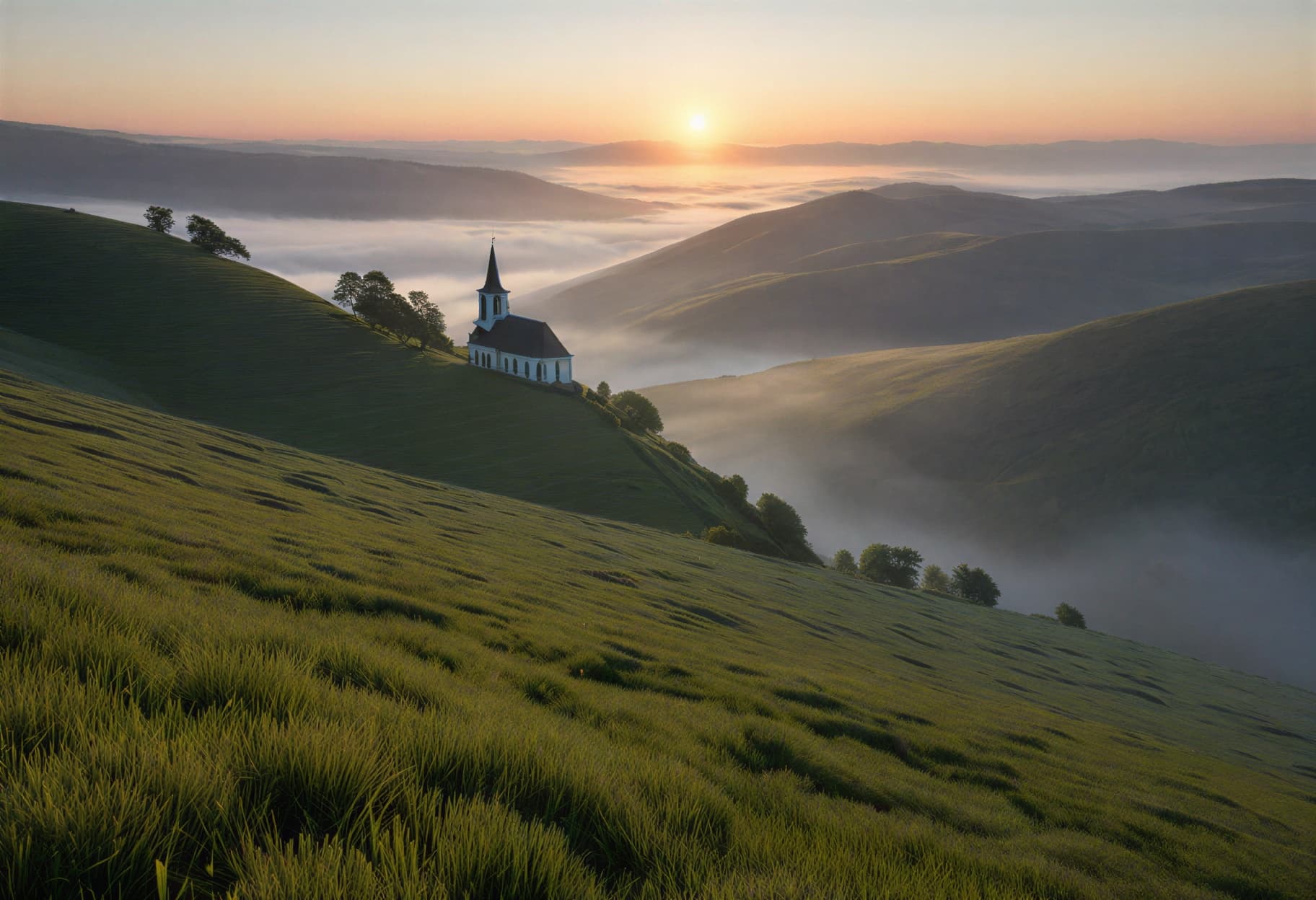
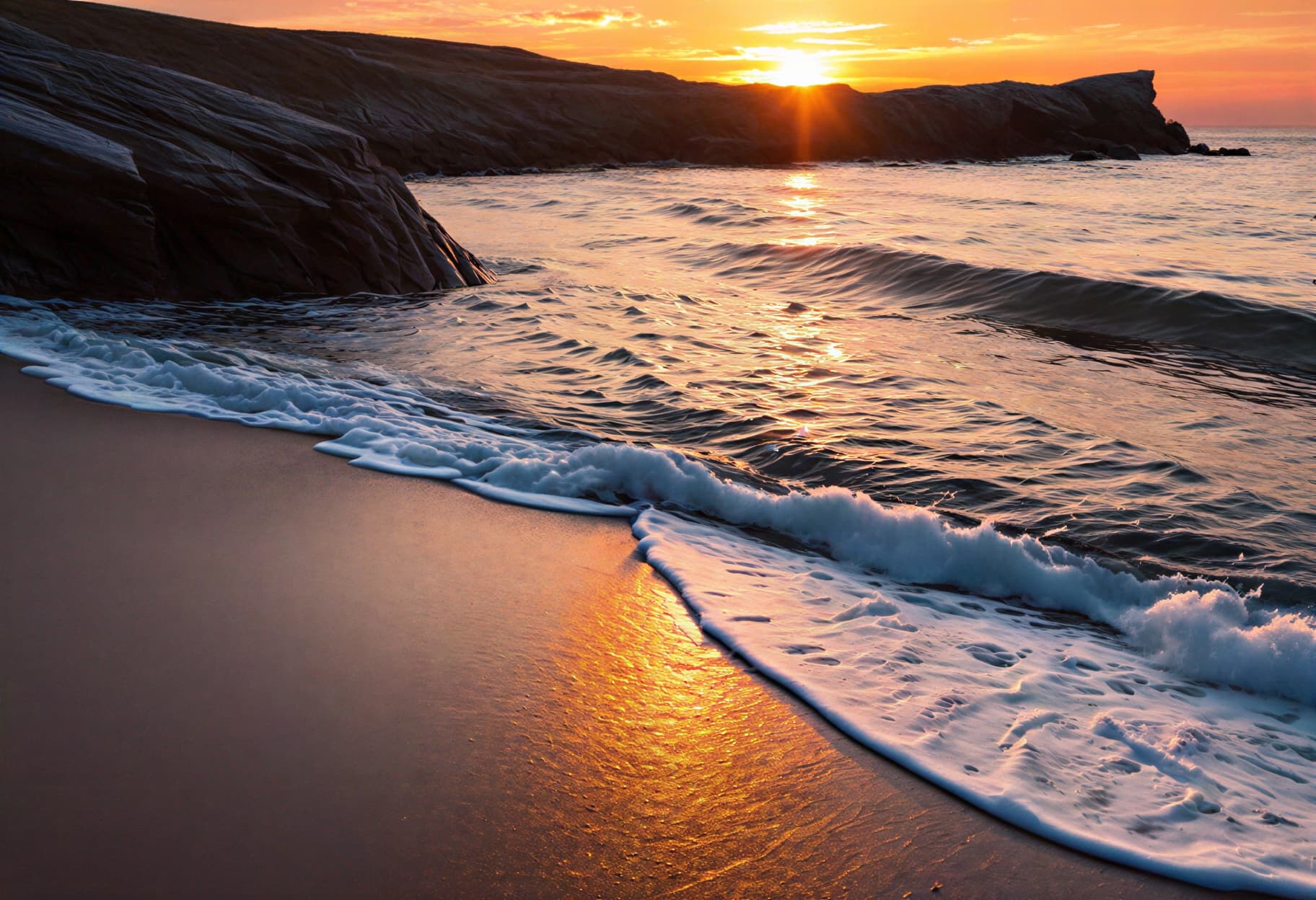
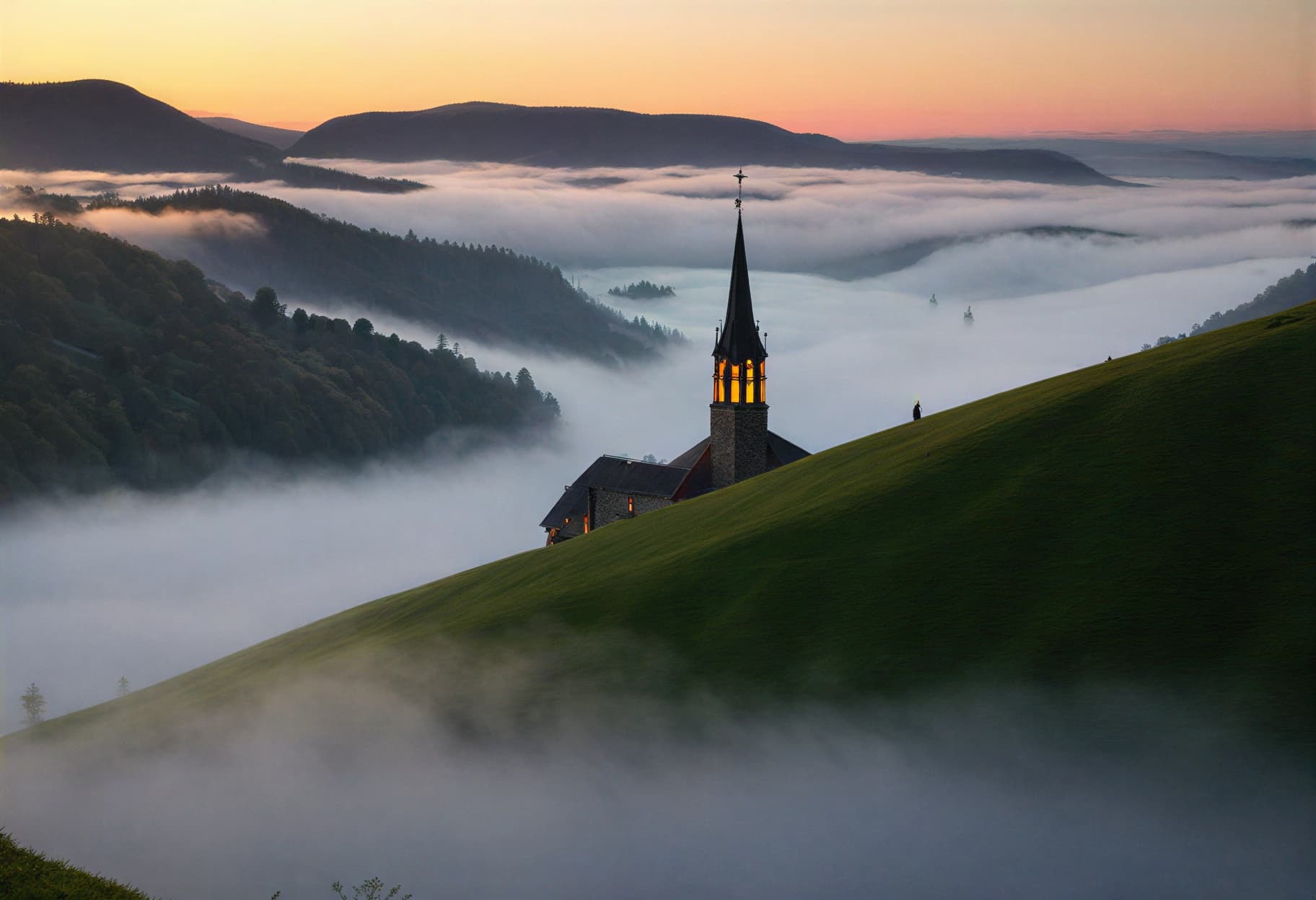
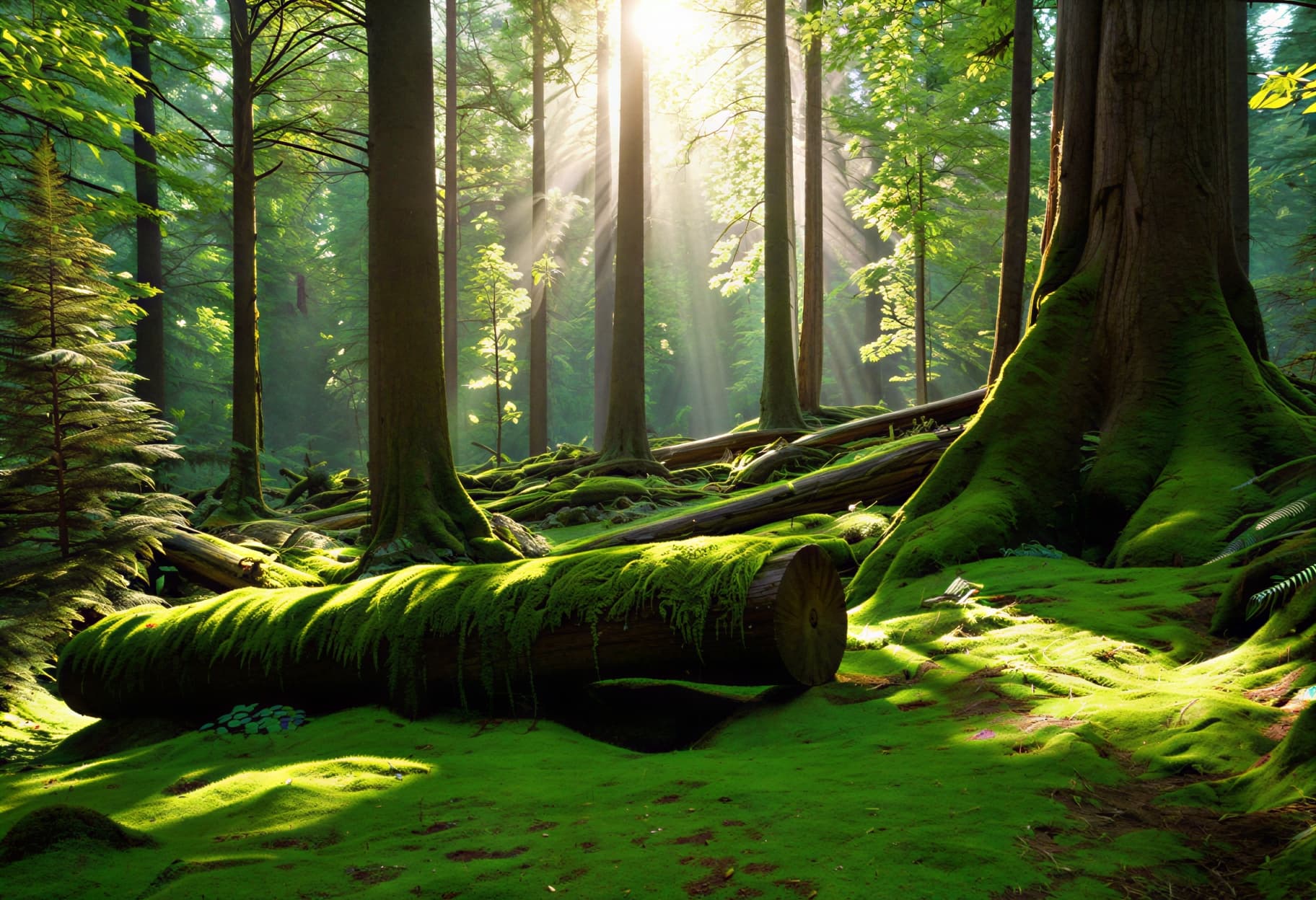
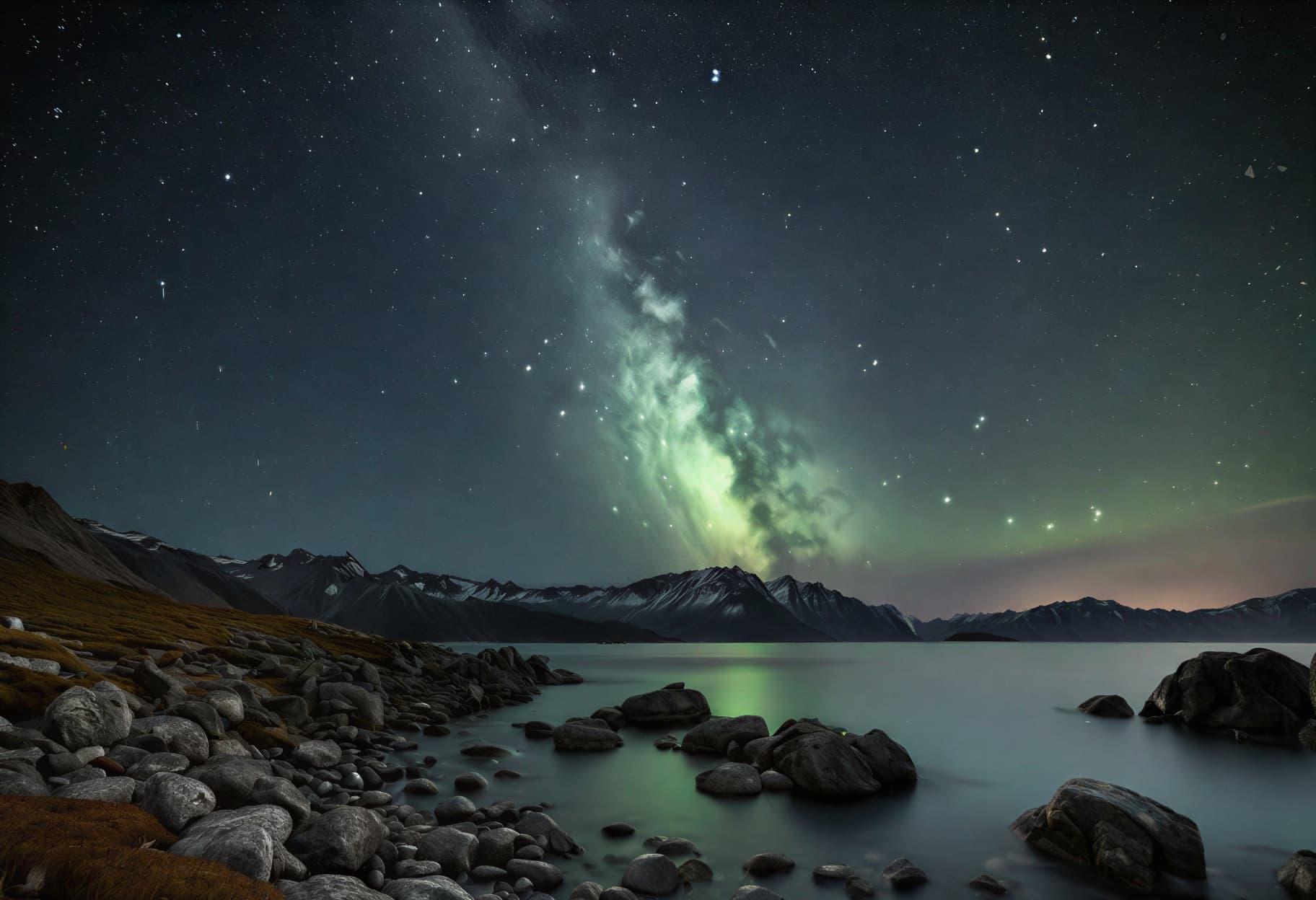
All images generated on Kalon Studio using prompts from this page. No external color grading, compositing, or sky replacement applied.
Use Case Gallery
Desktop and Phone Wallpapers
Scenic environments scaled for screens. Use 16:9 for desktop, 9:16 for phone, 21:9 for ultrawide monitors. The base prompt and mountain, coastal, and night-sky variations produce the strongest wallpaper compositions.
Art Prints and Framed Work
Landscape compositions intended for physical printing and framing. Use 3:2 for standard print ratios and 2:3 for vertical compositions. The atmospheric perspective and painterly texture tags ensure the output holds depth and detail at print scale.
Concept Art and Visual Development
Environment designs for games, films, animation, and worldbuilding projects. Use 16:9 for establishing shots and 3:2 for environmental concept sheets. Generate multiple time-of-day and weather variations of the same scene.
Editorial and Blog Headers
Wide-format landscape images for website headers, article illustrations, and social media banners. Use 16:9 or 21:9 for horizontal headers and 4:5 for social feed posts.
Landscape Variations
Five landscape biomes, each constructed around different terrain, light, and atmospheric conditions.
Alpine Summit
High-altitude mountain terrain with snow, rock, and expansive sky.
best quality, masterpiece, alpine mountain landscape, dramatic rocky peak with fresh snow on upper faces, exposed granite below tree line, foreground of alpine wildflowers and scattered boulders, midground glacial lake with turquoise meltwater reflecting peak, background of receding mountain range fading into atmospheric blue, crisp clear air with sharp distant detail, bright midday sun with strong directional shadows, deep blue sky with wispy cirrus clouds at high altitude, sense of immense scale, wide-angle panoramic composition, 16:9, high resolution, 8k
Golden Hour Coast
Warm ocean sunset with cliff, surf, and layered sky.
best quality, masterpiece, coastal sunset landscape, foreground of wet sand with retreating wave foam and shell fragments, midground rocky cliff face catching warm orange light on seaward side, background open ocean meeting sky at clean horizon line, sunset sky layered from deep orange at horizon through pink to pale blue overhead, scattered low clouds with golden undersides, long gentle waves breaking white against dark rocks, warm amber light across entire scene with cool shadow in cliff recesses, sense of coastal solitude, wide composition, 16:9, high resolution, 8k
Ancient Forest Interior
Dense woodland with filtered light and ground-level detail.
best quality, masterpiece, ancient forest landscape, towering old-growth trees with thick textured bark and high canopy, foreground of moss-covered fallen log with ferns growing from crevices, midground path winding between massive trunk bases, shafts of green-filtered sunlight breaking through canopy gaps, dappled light patterns on forest floor, background receding into deep green shadow, humid atmosphere with visible moisture in light beams, earthy color palette of deep green moss brown and amber light, sense of age and stillness, vertical elements throughout frame, 3:2, high resolution, 8k
Valley Mist at Dawn
Low fog filling terrain contours with soft early light.
best quality, masterpiece, misty valley landscape at dawn, foreground grassy hillside with dew visible on blades, midground dense fog layer filling valley floor obscuring lower terrain, treetops and church steeple emerging through mist layer, background distant hills visible above fog with early pink-gold sunrise light on their crests, gradient from cool blue valley shadow to warm golden hilltop light, fog following river contour through valley, soft diffused light with no harsh shadows, peaceful and expansive atmosphere, layered atmospheric depth, 16:9, high resolution, 8k
Starfield and Lake
Night-sky landscape with astronomical detail and still water reflection.
best quality, masterpiece, night sky landscape, foreground rocky lakeshore with smooth stones and still water edge, midground perfectly still alpine lake reflecting stars and Milky Way, background snow-peaked mountains silhouetted against starfield, Milky Way arching across upper frame with visible galactic core and cosmic dust lanes, thousands of individual stars with varying brightness, faint green aurora glow on northern horizon, no moon present allowing maximum star visibility, cool blue-black palette with warm star highlights, absolute stillness in water and air, wide-angle composition capturing full sky arc, 16:9, high resolution, 8k
More Landscape Styles
Six additional templates covering specific biomes, seasons, and atmospheric conditions.
best quality, masterpiece, desert landscape, sweeping sand dunes with wind-carved ridgeline patterns, foreground ripple texture in sand catching low angled light, midground massive dune casting long blue-purple shadow on leeward side, background distant mesa formations hazy in heat shimmer, golden hour sun casting warm amber across sand surfaces, clear sky with faint high-altitude dust haze, minimal vegetation with single desert brush, vast emptiness and geometric natural forms, warm monochromatic palette with shadow contrast, panoramic composition, 16:9, 8kbest quality, masterpiece, autumn landscape, forest path covered in fallen leaves in red orange and gold, foreground carpet of detailed individual leaves with visible veins, midground path curving between maple and oak trees in full autumn color, overhead canopy filtering warm amber sunlight, background forest receding into soft golden haze, gentle breeze sending scattered leaves drifting through air, warm saturated earth-tone palette, dappled light creating pattern across path surface, sense of seasonal transition and gentle melancholy, 3:2, 8kbest quality, masterpiece, fantasy landscape, cluster of floating islands suspended in cloud-level sky, largest island with waterfall pouring off edge into clouds below, lush green vegetation and ancient stone ruins on island surfaces, foreground island with gnarled tree growing at cliff edge, connecting rope bridges between two islands, volumetric clouds passing between and beneath islands, sense of impossible geography and vertical depth, 16:9, 8kbest quality, masterpiece, stormy ocean landscape, massive dark waves with white foam crests rolling toward rocky shore, foreground wave crashing against black volcanic rock sending spray upward, midground churning sea surface with wind-streaked whitecaps, background dark storm clouds with single break showing pale light, cold blue-gray palette with green-black ocean depths, raw power and movement, 16:9, 8kbest quality, masterpiece, winter landscape, undisturbed snow field stretching to treeline of dark pine forest, foreground fresh powder snow with subtle blue shadow in depressions, animal tracks crossing frame from left to right, midground isolated bare birch tree with snow collected on branches, background pine forest edge sharp against pale overcast sky, pure white and deep green palette, minimalist composition, 16:9, 8kbest quality, masterpiece, tropical waterfall landscape, multi-tiered waterfall cascading over dark mossy rock face, foreground shallow pool with crystal clear water showing riverbed stones, tropical vegetation framing falls, midground main fall with white rushing water and mist plume rising, background upper jungle canopy with bright sky, warm humid atmosphere, 2:3, 8kRecommendation: Negative Prompt for AI Landscapes
Landscape generation fails in ways distinct from those of portrait or character art. This negative prompt targets specific spatial failures like floating objects, disconnected horizons, and inconsistent atmospheric perspective.
Negative Prompt:
floating objects, disconnected horizon, sky-ground seam visible, flat depth, no atmospheric perspective, identical foreground and background detail, repetitive terrain pattern, tiled texture, copy-paste mountains, symmetrical landscape, unnatural color gradient in sky, banded sky, plastic water, mirror-perfect reflection without distortion, oversaturated, neon colors, human figure, person, building, urban, text, watermark, signature, low quality, blurry, cropped
Explanation: The spatial block addresses the most frequent landscape failure: elements that don't sit convincingly within a coherent three-dimensional space. "Identical foreground and background detail" blocks the flatness that occurs when the model renders distant objects with the same sharpness as near ones. Repetition tags stop the model from duplicating terrain features. Sky and water tags ensure natural rendering of environmental elements. Finally, human elements are blocked to maintain a pure natural landscape genre.
How To Use This Prompt in Kalon Studio
- Open Kalon Studio and navigate to the Generate tab.
- Copy any prompt from this page using the copy button beside it.
- Paste it into the prompt field. Customize for your scene — change "wildflower meadow" to "rocky shoreline," swap "golden hour" for "overcast midday," replace "mountain range" with "volcanic caldera." The three-zone structure (foreground/midground/background) is the skeleton — fill each zone with the terrain and detail appropriate to your biome.
- Paste the negative prompt into the negative prompt field. For landscapes specifically, the negative prompt prevents spatial incoherence and terrain repetition — the two failures that viewers register immediately even when they can't articulate what's wrong with the image.
- Select your aspect ratio. Use 16:9 for wide panoramic compositions and desktop wallpapers — this is the natural format for horizontal landscapes. Use 21:9 for ultrawide monitors. Use 3:2 for art prints. Use 9:16 for phone wallpapers — vertical landscapes need strong vertical elements (waterfalls, trees, cliff faces) to justify the format. Use 2:3 for vertical compositions like waterfalls and forest interiors.
- Click Generate. Review 4–6 outputs — spatial depth, horizon accuracy, and sky rendering vary between generations. The strongest landscape output will have visible depth progression from foreground to background, a clean horizon where sky and terrain meet without visible seams, and atmospheric perspective that desaturates and softens distant elements relative to near ones.
Do/Don’t: Strengthening Landscape Compositions
✅ DO:
❌ DON'T:
Comparison Table: Kalon Vs Other AI Landscapes
Kalon excels at generating AI landscapes with rich scenery, realistic lighting, and detailed environments.
| Feature | Kalon Studio | OpenArt | Fotor | ImagineArt | MockoFun |
|---|---|---|---|---|---|
| Copy-paste prompt library | One-click copy buttons | Not available | Not available | Not available | Template with blanks |
| Depth and composition education | Three-zone + atmosphere breakdown | "Be specific" tips | None | None | Basic formula |
| Landscape-specific negative prompt | Spatial + terrain + sky tags | Not provided | Not provided | Not provided | Not provided |
| Verified sample outputs | Kalon-generated images | Community gallery | Generated preview | Generated preview | Generated preview |
| Platform compatibility | Standard tags, works anywhere | Platform-native | Platform-native | Platform-native | Platform-native |
| Biome separation | Alpine/Coast/Forest/Valley/Night/Desert/Autumn/Fantasy/Storm/Winter/Tropical | Landscape as one category | Style presets | Style presets | Type list only |
| Weather and time control | Per-prompt light + weather tags | General tips | Not available | Not available | Template slot |
| Free access | Daily coins included | Free with credits | Free with credits | Free with credits | Free with credits |
Frequently Asked Questions
Depth You Can Walk Into!!
Three-zone composition, atmospheric perspective, and weather control, not a flat scenic filter, but a spatial system that builds landscapes from the ground up.
Start Generating Landscapes